A promise that a heat pump “pays for itself” is only useful when the assumptions are visible. The same equipment can have a different financial result in two homes because demand, water temperatures, tariffs and the existing heating system differ.
Define the baseline
Start with actual fuel consumption, costs and the services included. Separate space heating from hot water if possible. Fuel input is not identical to useful heat delivered; the existing boiler’s seasonal efficiency also matters. A prediction should explain how occupancy and weather differences are handled.
Use a consistent comparison
| Assumption | Ask the supplier | Why it changes the result |
|---|---|---|
| Annual useful heat | What building and weather data were used? | Determines heat demand |
| Seasonal performance | Does it include hot water and backup? | Determines electricity use |
| Tariffs | Which prices and standing charges apply? | Changes annual cost |
| Project cost | Are emitters, electrical work and commissioning included? | Changes initial investment |
| Maintenance | What recurring costs were assumed? | Changes net savings |
Distinguish a rating from a prediction
A laboratory COP at one operating point is not the annual performance of your installed system. Request an estimate matched to climate, emitters and flow temperature. Confirm whether pumps, controls, hot-water production and electric backup are inside the calculation boundary.
Calculate transparently
For an illustrative method, annual electricity equals useful heat demand divided by seasonal system performance. Annual operating cost then adds the applicable tariff, other energy and recurring costs. Simple payback is the incremental initial investment divided by positive annual net savings. If savings are zero or negative, that formula does not produce a meaningful positive payback.
Stress-test the promise
Ask for a less favourable tariff and performance scenario. Grants, financing, equipment life and future price changes affect results and should be identified separately. A clear range with stated assumptions is more useful than an unexplained guaranteed number. Comfort and emissions can matter too, but they should not be counted as cash savings.
Discuss your project with Thermovo.
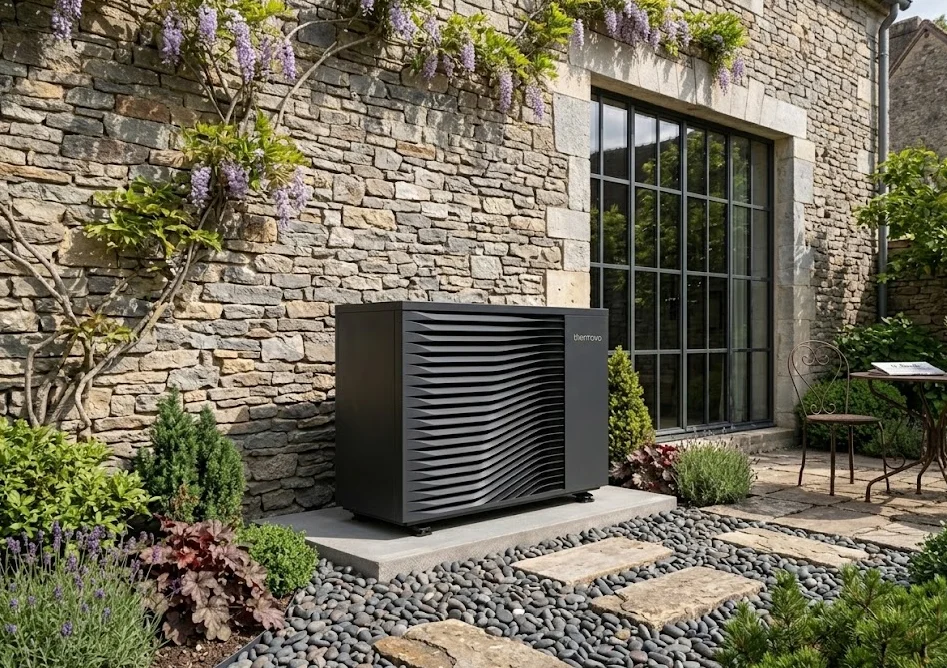
Cover: AI-generated editorial illustration; not a photograph of an installed Thermovo product.
Before requesting a project quotation
| Check | Information to prepare |
|---|---|
| Project scope | State the country, project type, operating conditions and required delivery date. Identify which decisions still need an installer or designer. |
| Topic-specific evidence | payback scenarios with stated tariffs, costs and sensitivity |
| Responsibility and acceptance | Record who supplies, installs, commissions and services the equipment. Ask which documents and checks are included, and confirm exclusions in writing. |
This checklist helps define a request; it is not a model performance claim, installation design or promise of availability.
Relevant equipment · Request a project quotation — Selection and procurement · About Thermovo