Thermovo
Back to Blog
Costs & Savings

Heat Pump Costs 2026: Real Purchase Prices, Running Costs & Savings Explained

2026-06-16Thermovo Technical Team14 min read
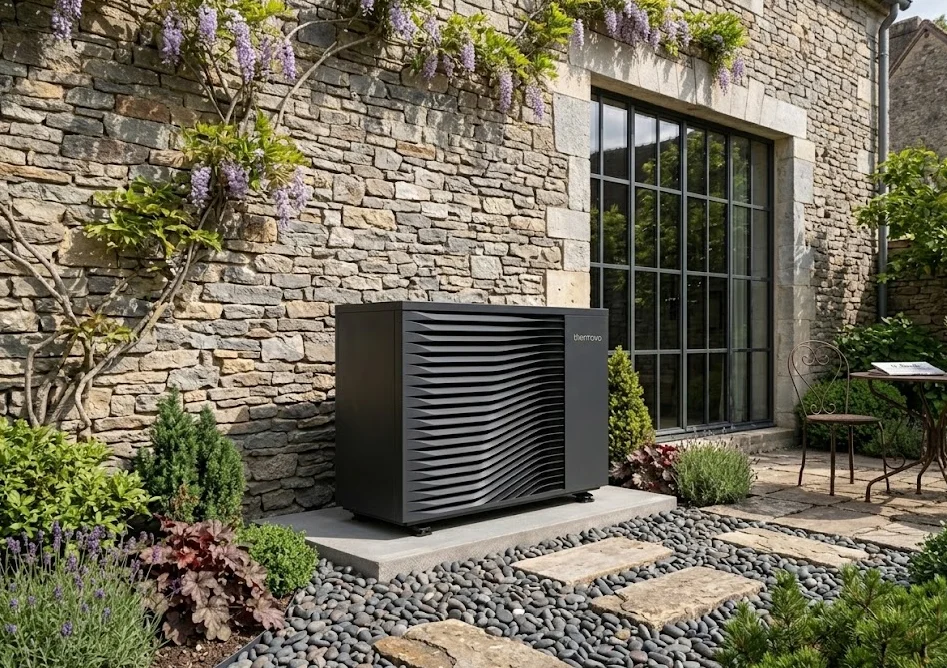
Heat pump outdoor unit installation with cost breakdown infographic

Heat Pump Costs 2026: Real Purchase Prices, Running Costs & Savings Explained

If you've spent any time researching heat pumps, you've noticed one thing: most cost estimates are vague at best, and flat-out misleading at worst. "It depends on your house size," "costs vary by region," "you'll save thousands" — sure, but what are the actual numbers?

This guide gives you real figures. Not ranges pulled from manufacturer brochures, not theoretical best-case scenarios. We're going to break down what homeowners across Germany, France, the Netherlands, and Italy are actually paying in 2026 — for the unit, the installation, the annual running costs, and crucially, how fast the investment pays for itself.


Part 1: What Does a Heat Pump Actually Cost to Buy?

Let's start with the hardware. Heat pump prices vary by type, capacity, and brand, but here are the real market prices you'll encounter when you start getting quotes.

Air Source Heat Pump (Air-to-Water)

This is the most common type for residential retrofits and new builds in Europe.

CapacityTypical Price Range (Unit Only)Suitable For
5-7 kW€4,500 - €7,000Small apartment, well-insulated home (<100 m²)
8-12 kW€6,000 - €10,000Average 3-4 bedroom house (100-180 m²)
13-16 kW€9,000 - €14,000Larger home or older building (180-250 m²)
17-25 kW€12,000 - €18,000Large property, commercial, or multi-unit

These are prices for monobloc units — the most common configuration in Europe. Split systems (separate indoor/outdoor units) tend to run €1,000-2,000 more due to additional refrigerant piping and installation complexity.

R290 (propane) units — which are rapidly becoming the default in the EU market — typically cost 5-10% more than equivalent R32 units. The premium is offset by higher efficiency and long-term regulatory security, which we'll get to later.

Ground Source (Brine-to-Water) Heat Pump

Ground source systems are substantially more expensive upfront due to the drilling or trenching required for ground loops.

ConfigurationTypical Price (Unit + Groundwork)
Horizontal collector (trench)€15,000 - €22,000
Vertical borehole (1-2 holes)€20,000 - €30,000
Vertical borehole (3+ holes, large property)€28,000 - €40,000+

Ground source achieves higher efficiency (SCOP 4.5-5.5 vs 3.5-4.5 for air source), but the higher upfront cost means longer payback periods. For most residential applications in 2026, a well-sized air source heat pump is the more practical choice.

Air-to-Air Heat Pump (Split AC / Multi-Split)

Often overlooked in European heating discussions, air-to-air systems are the cheapest option — but they only handle space heating and cooling, not domestic hot water.

ConfigurationTypical Price
Single room (2.5-3.5 kW)€800 - €1,500
Multi-split (3-4 rooms, 5-8 kW)€3,000 - €6,000
Whole-house multi-split (8-12 kW)€5,000 - €9,000

If you need hot water too, you'll need a separate water heating solution. For most European homes, air-to-water remains the standard recommendation.


Part 2: Installation Costs — The Part Nobody Talks About Enough

This is where the "it depends" factor really kicks in. Installation costs vary enormously based on your existing heating system, radiator setup, electrical infrastructure, and local labor rates. Here's what to budget:

Standard Installation (Direct Boiler Replacement)

If you're replacing a gas or oil boiler with a heat pump and your home is already well-insulated with properly sized radiators or underfloor heating:

CountryTypical Installation CostWhat's Included
Germany€4,000 - €7,000Unit placement, hydraulic connections, electrical, commissioning
France€3,500 - €6,000Same scope; RGE QualiPAC certification included
Netherlands€3,500 - €6,500Installation plus CV-ketel removal
Italy€3,000 - €5,000Standard installation; lower labor costs in south

Complex Installation (System Upgrade Required)

If your home needs radiator upgrades, a new hot water cylinder, or electrical panel work, costs increase significantly:

Additional WorkExtra Cost
Replace radiators (6-8 units, K33 type)€3,000 - €5,000
New hot water cylinder (200-300L)€1,200 - €2,500
Electrical panel upgrade (3-phase)€800 - €2,000
Buffer tank installation€600 - €1,200
Asbestos removal (old boiler room)€1,000 - €3,000

Real total, all-in: A typical 4-bedroom house in Germany replacing a gas boiler with an air source heat pump — including a few radiator upgrades and a new cylinder — runs €14,000 to €22,000 all-in. Before subsidies.

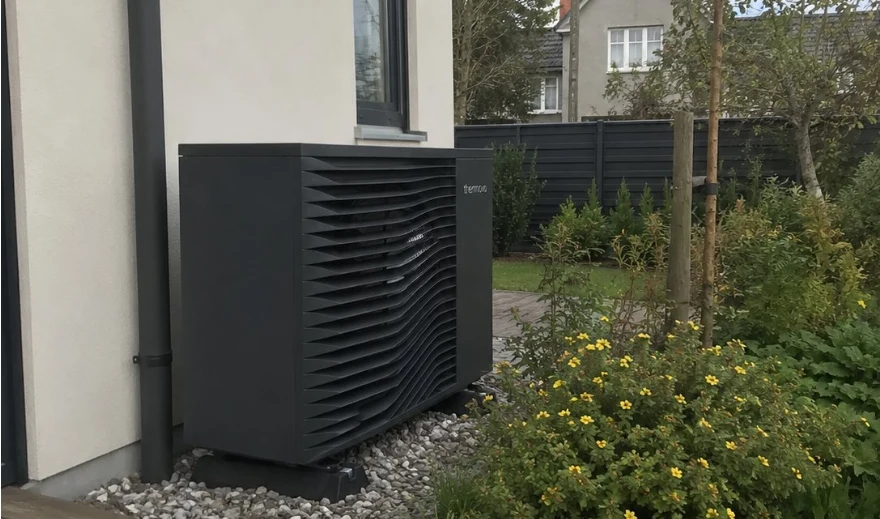
Air source heat pump outdoor unit installation example — monobloc unit with hydraulic connections


Part 3: Running Costs — Heat Pump vs Gas Boiler (Real Math)

This is the question every homeowner actually cares about: "How much will it cost to run?"

The Calculation

VariableDescription
Annual heat demandTotal heat your home needs per year (kWh)
SCOPSeasonal Coefficient of Performance (typical: 3.5-4.5)
Electricity priceYour tariff rate per kWh (€)

Quick formula:

Annual Cost = (Heat Demand ÷ SCOP) × Electricity Price

Let's use a real example: a 150 m² house in Germany with an annual heat demand of 15,000 kWh (typical for a moderately insulated home built 1990-2005).

Gas boiler (old, 85% efficiency):

  • Gas consumption: 15,000 ÷ 0.85 = 17,647 kWh
  • Gas price (Germany, 2026): ~€0.10/kWh (including all taxes and grid fees)
  • Annual cost: 17,647 × €0.10 = €1,765

Air source heat pump (SCOP 4.0):

  • Electricity consumption: 15,000 ÷ 4.0 = 3,750 kWh
  • Electricity price (Germany, 2026): ~€0.30/kWh
  • Annual cost: 3,750 × €0.30 = €1,125

Annual saving: €640 (36% less than gas)

What If You Have a Special Heat Pump Tariff?

Many European utilities now offer reduced electricity rates for heat pump owners:

CountryStandard RateHeat Pump TariffAnnual Saving vs Standard
Germany€0.30/kWh€0.22/kWh (Wärmepumpenstrom)€300
France€0.23/kWh€0.17/kWh (Tempo/HPHC)€225
Netherlands€0.35/kWh€0.28/kWh (dalurentarief)€260

With a heat pump tariff, the same German house drops to: 3,750 × €0.22 = €825/year — saving €940/year vs gas.

Running Cost Comparison Across Countries

Using the same 15,000 kWh heat demand, SCOP 4.0:

CountryGas Annual CostHP (Standard Tariff)HP (Special Tariff)Annual Saving
Germany€1,765€1,125€825€640-940
France€1,520€862€638€658-882
Netherlands€2,000€1,313€1,050€687-950
Italy€1,650€1,125€863€525-787
UK£1,400£900£675£500-725

Gas prices from Eurostat Q1 2026 averages. Electricity from national regulator data. Your actual numbers will vary — but the direction is consistent: heat pumps cost less to run everywhere in Europe right now.


Part 4: Government Grants & Incentives in 2026

The numbers above look good, but they get dramatically better once you factor in subsidies. Here are the key programs:

Germany — BAFA (BEG)

Germany runs the most generous heat pump subsidy in Europe:

ComponentCoverage
Base subsidy (air source heat pump)30% of eligible costs
Climate speed bonus (replacing oil/gas/coal)+20%
Income bonus (household income <€40,000)+30%
Maximum total70% (capped at €21,000)
Efficiency bonus (natural refrigerant or ground source)+5%

What this means: A €18,000 heat pump installation for a household replacing an oil boiler, earning under €40,000/year, can receive up to €12,600 in subsidies — leaving you with €5,400 out of pocket.

Critical rule: Apply before you sign the installation contract. Retroactive applications are rejected.

France — MaPrimeRénov'

Income LevelAir-Water Heat Pump Subsidy
Very low (bleu)€8,400
Low (jaune)€6,300
Intermediate (violet)€4,200
High (rose)€2,400

Additional bonuses may apply if you combine the heat pump with insulation work. The installation must be done by an RGE QualiPAC-certified installer, and the quote must be approved by ANAH before signing.

Netherlands — ISDE

The ISDE subsidy was slightly reduced for 2026 but remains substantial:

  • Air-water heat pump (≥4 kW): up to €1,875
  • Ground source heat pump: up to €4,500
  • Hybrid heat pump: up to €1,500
  • Minimum SCOP requirement: 4.0 (up from 3.8)

You can stack ISDE with insulation subsidies. If you install insulation within 24 months of the heat pump, the insulation subsidy doubles.

Italy — Conto Termico & Superbonus

  • Conto Termico 3.0: up to 65% of costs for air source heat pumps, paid as an annual rebate over 2-5 years
  • Ecobonus: 50-65% tax deduction spread over 10 years
  • The 110% Superbonus has been scaled back significantly for 2026 — now limited to 70% for condominiums and 65% for single-family homes with specific conditions

Part 5: When Do You Actually Break Even?

This is the bottom line. Let's calculate the payback period for three scenarios:

Scenario 1: Gas Boiler Replacement — Old, Inefficient Home (Germany)

  • Heat pump system (10 kW air source, includes radiator upgrades): €19,500
  • BAFA subsidy: 50% (30% base + 20% speed bonus) = €9,750
  • Net cost after subsidy: €9,750
  • Annual running cost saving vs gas (with heat pump tariff): €940
  • Payback period: 10.3 years
  • 20-year total savings (including replacement boiler cost avoided): €22,000+

Scenario 2: New Build — Heat Pump vs Gas (Netherlands)

  • Heat pump system (8 kW air source): €12,000 (new build — simpler install)
  • ISDE subsidy: €1,875
  • Net cost after subsidy: €10,125
  • Gas boiler alternative (what you'd have paid): €4,500
  • Price premium for choosing heat pump: €5,625
  • Annual running cost saving vs gas: €950
  • Payback period: 5.9 years
  • After 20 years: €19,000 in net savings

Scenario 3: Direct Replacement — Well-Insulated Home (France)

  • Heat pump system (8 kW air source, straight swap): €13,000
  • MaPrimeRénov' (intermediate income): €4,200
  • CEE (energy savings certificates): ~€1,000
  • Net cost after all subsidies: €7,800
  • Annual running cost saving vs gas (Tempo tariff): €882
  • Payback period: 8.8 years
  • 20-year total savings: €17,000+

The Inflection Point

There's a clear pattern: the worse your current heating system, the faster heat pumps pay off. The math breaks decisively in favor of heat pumps when:

  1. You're replacing an oil or LPG boiler (fuel costs 2-3× electricity)
  2. You qualify for significant subsidies (50%+ coverage)
  3. You can access a heat pump electricity tariff
  4. You install solar PV alongside the heat pump

If you do all four — not uncommon in new German builds — the payback can drop to under 5 years.


Part 6: Hidden Costs and Gotchas to Watch For

Every honest cost guide needs a "what can go wrong" section. Here are the expenses nobody warns you about:

1. Sound Assessment & Planning Permission

Air source heat pumps make noise — typically 40-55 dB at 3 meters. In Germany and France, units placed too close to neighboring properties may require a sound assessment (€500-1,000) or acoustic enclosure (€800-2,000). Check local regulations before choosing the placement location.

2. Heat Loss Calculation (Required for Subsidies)

Most subsidy programs require a professional heat loss calculation (Heizlastberechnung / étude thermique). This costs €300-800 and must be done by a certified professional. Don't skip this — undersized heat pumps struggle in winter, oversized ones cycle inefficiently.

3. Hydraulic Balancing

After installing a heat pump, the entire heating system needs hydraulic balancing to ensure even heat distribution. This is mandatory for BAFA subsidies in Germany. Budget €400-800.

4. Annual Maintenance

Heat pumps need less maintenance than boilers, but they're not zero-maintenance:

TaskFrequencyAnnual Cost
Visual inspection, filter cleaningAnnual€120-200
Refrigerant circuit check (every 2 years)Biennial€80-150
Heating water quality checkEvery 2-3 years€50-100

Budget €150-250/year for maintenance — roughly half what you'd spend on a gas boiler service.

5. Electricity Supply Upgrade

Larger heat pumps (12 kW+) or properties with limited electrical capacity may need a supply upgrade from single-phase to three-phase. This involves the grid operator and can take weeks to months. Budget €800-2,000 and factor in the timeline.


Part 7: Is a Heat Pump Worth It in 2026?

Let's be direct. For most European homeowners, the answer is yes — but the degree of "worth it" depends heavily on your specific situation.

Best Candidates (Payback <7 Years)

  • Replacing oil or LPG heating
  • German homeowners eligible for 50%+ BAFA subsidies
  • New builds (lower installation cost, designed for low-temperature heating)
  • Homes with underfloor heating or large radiators already installed
  • Households planning to install solar PV

Good Candidates (Payback 7-12 Years)

  • Replacing an aging gas boiler in a well-insulated home
  • Standard subsidy levels (30-40% coverage)
  • Homes needing moderate radiator upgrades

Marginal Cases (Payback 15+ Years)

  • Recently installed efficient gas boiler (replace when it fails, not before)
  • Poorly insulated homes without plans for insulation upgrades
  • Properties where planning permission is likely to be problematic
  • Areas with very high electricity rates and no heat pump tariff available

The Bottom Line

A heat pump in 2026 is not a speculative "green" investment — it's a financially rational decision for most European households. The combination of high gas prices, generous subsidies, and mature heat pump technology means that in the majority of scenarios we've analyzed, you come out ahead within 10 years, often much sooner.

The key is getting the system right: correct sizing, professional installation, proper radiator matching, and claiming every subsidy you're entitled to. Cut corners on any of these, and the math falls apart.

If you're considering a heat pump for your home — or specifying one for a project — our team at Thermovo can help you work through the numbers for your specific property and country. Get in touch for a free, no-commitment cost assessment. We'll tell you honestly whether it makes sense — and if it does, exactly how much you'll save.