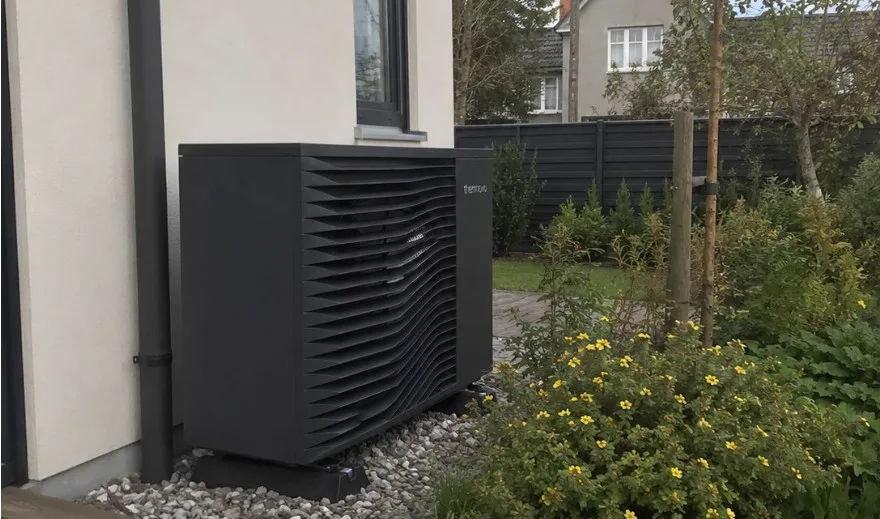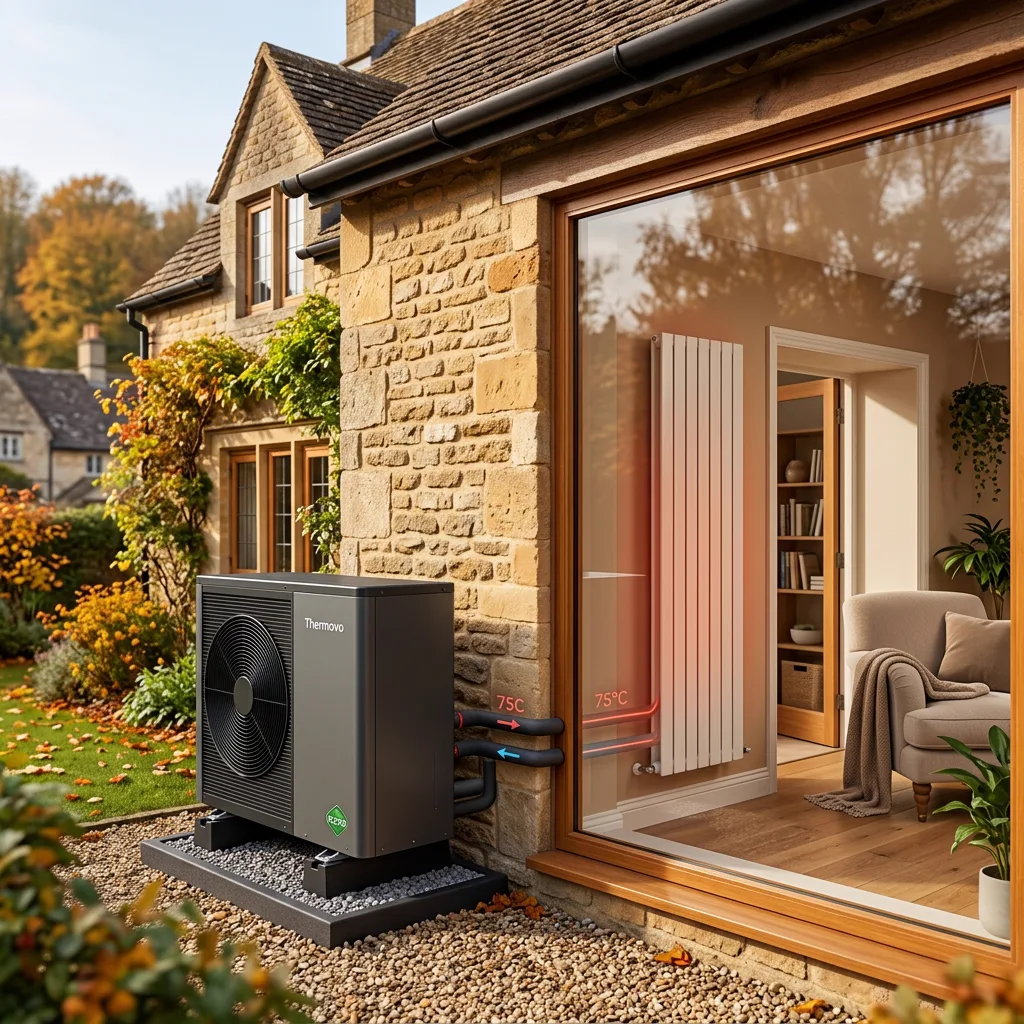
A widespread misconception among homeowners in Europe is that air-to-water heat pumps can only work efficiently in newly built properties with underfloor heating. While underfloor heating provides an ideal low-temperature surface (operating at 30°C to 35°C), advances in heat pump technology—specifically R290 high-temperature heat pumps and modern radiator optimization techniques—allow existing homes with traditional wall-mounted panel radiators to transition seamlessly to heat pumps in 2026.
Operating a heat pump with radiators does not require ripping up your floors or replacing every heating element in your house. With targeted engineering step-by-step room calculations, flow temperature reduction, strategic radiator upgrades (such as Type 22 to Type 33 or fan-assisted convectors), and dynamic hydronic balancing, existing homes can achieve seasonal efficiency ratios (SCOP > 3.8) while enjoying reliable winter comfort.
This technical retrofit guide outlines the thermodynamics, radiator selection, flow temperature optimization, and hydraulic design needed to successfully run a heat pump on an existing radiator circuit.
1. The Thermodynamics of Low-Temperature Radiator Heating
To understand how radiators work with a heat pump, we must examine the fundamental heat transfer equation:
$Q = U cdot A cdot Delta T_{m}$
Where:
- $Q$ = Thermal heat output delivered to the room (Watts)
- $U$ = Heat transfer coefficient of the radiator panel ($W/m^2K$)
- $A$ = Surface area of the radiator ($m^2$)
- $Delta T_{m}$ = Logarithmic Mean Temperature Difference (LMTD) between the average radiator water temperature and the room indoor air temperature.
In traditional gas or oil boiler systems, water was supplied at high flow temperatures (75°C flow / 65°C return), creating a high temperature difference ($Delta T_{m} approx 50K$) relative to a 20°C room. Heat pumps operate most efficiently at lower flow temperatures (45°C to 55°C).
When lowering the supply water temperature, $Delta T_{m}$ drops. To maintain the required heat output $Q$ to keep the room warm, you must either increase the radiator surface area ($A$), enhance convective heat transfer ($U$) with micro-fans, or reduce room heat loss through insulation.
2. Radiator Retrofit & Optimization Workflow
The diagram below illustrates the systematic engineering approach to retrofitting an existing radiator network for heat pump integration:
Loading diagram...
3. Radiator Types & Heat Output Comparison Matrix
Panel radiators are categorized by the number of water-carrying panels (first digit) and internal convector fins (second digit). The table below compares heat emission capacities across standard panel types and specialized heat pump convectors at different supply water temperatures:
| Radiator Type | Panel & Fin Structure | Depth | Heat Output at 75/65/20°C (Boiler) | Heat Output at 55/45/20°C (Heat Pump Mid) | Heat Output at 45/35/20°C (Heat Pump Low) | Retrofit Recommendation |
|---|---|---|---|---|---|---|
| Type 11 (K1) | 1 Panel, 1 Convector Fin | 60 mm | 100% (Baseline ~1000 W) | ~48% (~480 W) | ~30% (~300 W) | Replace: Surface area too small for low flow temps |
| Type 21 (P+) | 2 Panels, 1 Convector Fin | 70 mm | 135% (~1350 W) | ~65% (~650 W) | ~41% (~410 W) | Conditional: Retain in small bedrooms/hallways |
| Type 22 (K2) | 2 Panels, 2 Convector Fins | 100 mm | 180% (~1800 W) | ~86% (~860 W) | ~55% (~550 W) | Ideal Baseline: Retain or install in living spaces |
| Type 33 (K3) | 3 Panels, 3 Convector Fins | 160 mm | 250% (~2500 W) | ~120% (~1200 W) | ~77% (~770 W) | Top Choice: High capacity upgrade without changing width |
| Fan Convector (DBH) | 2 Panels + Micro-Fans | 110 mm | N/A (Designed for Low Temp) | 210% (~2100 W) | 160% (~1600 W) | Premium Upgrade: Maximum heat transfer at 35°C-45°C |
4. Step-by-Step Radiator Optimization Strategy
Step 1: Conduct Room-by-Room Heat Loss Calculations
Never size a heat pump based solely on whole-building square footage. Perform a room-by-room heat loss calculation according to EN 12831. This identifies specific "bottleneck rooms" (typically corner living rooms or rooms with high window area) where existing radiators might be undersized for low supply temperatures.
Step 2: Establish Target Flow Temperature Curve
Aim for a design flow temperature of 50°C to 55°C at the outdoor design ambient temperature (e.g., -10°C).
- R290 Monobloc heat pumps achieve a SCOP of 3.8 to 4.2 at 50°C flow, compared to a SCOP of 3.0 at 65°C flow.
- Lowering design flow temperature by just 1°C increases heat pump efficiency by ~2.5%.
Step 3: Upgrade Bottleneck Radiators
In rooms where existing Type 11 radiators cannot meet thermal demand at 50°C flow:
- Option A (Dimensional Swap): Replace a Type 11 radiator with a Type 22 or Type 33 radiator of identical length and height. A Type 33 radiator delivers more than double the thermal output of a Type 11 without occupying extra wall width.
- Option B (Smart Fan Add-ons): Install magnetic low-voltage radiator boost fans beneath existing Type 22 radiators. These micro-fans increase convective airflow across the fins, boosting heat output by 30% to 50% at low flow temperatures.
Step 4: Implement Dynamic Hydronic Balancing
Hydronic balancing ensures every radiator in the house receives its exact calculated water flow rate ($dot{m}$).
- Fit thermostatic radiator valves (TRVs with dynamic pre-setting inserts) on all radiators.
- Balance the system to maintain a constant temperature differential ($Delta T$) of 5K to 8K across flow and return manifolds.
- Proper balancing prevents short-circuiting (where water returns to the heat pump too quickly without delivering heat), which causes compressor cycling and degrades efficiency.
5. System Architecture: High-Temp R290 vs Hybrid Systems
When upgrading an existing home with radiators, homeowners typically choose between two primary system paths:
Path A: All-Electric R290 Monobloc (Direct Replacement)
- How it Works: Replaces the gas/oil boiler completely. Uses an R290 Monobloc heat pump capable of supplying flow temperatures up to 75°C during extreme cold snaps, operating at 45-55°C during normal winter conditions.
- Pros: 100% decarbonization, eliminates gas grid connection fees, maximum national subsidies (e.g., BAFA in Germany, MaPrimeRénov' in France, ISDE in NL).
- Requirements: Targeted radiator upgrades in 20-30% of rooms.
Path B: Hybrid Heat Pump (Heat Pump + Gas Boiler)
- How it Works: The heat pump covers 70-85% of the annual heating load at flow temperatures below 50°C. The existing gas boiler fires up automatically during severe sub-zero weather when high flow temperatures (>65°C) are needed.
- Pros: Zero radiator replacements required; lower initial equipment cost.
- Cons: Retains gas standing charges; lower overall carbon reduction.
6. Frequently Asked Questions (FAQ)
Q: Do I need to replace all radiators in my house to install a heat pump?
A: No. In most typical residential retrofits, 70% to 80% of existing radiators (especially Type 22 models) can be retained. Only undersized Type 11 radiators in critical living areas need to be upgraded to Type 22/33 or retrofitted with fan boosters.
Q: What flow temperature should I set for my heat pump with radiators?
A: Target a weather-compensated heating curve with a maximum flow temperature of 50°C to 55°C during design cold weather (-10°C outdoors), dropping to 35°C to 40°C during mild spring/autumn days.
Q: Can a heat pump work with old cast iron radiators?
A: Yes! Cast iron radiators have high water volume and large surface mass. While they take longer to warm up, they radiate heat evenly and perform exceptionally well with low-temperature heat pumps.
Q: Why is hydronic balancing mandatory for heat pump retrofits?
A: Unbalanced radiator networks cause water to flow through the path of least resistance, starving distant radiators and sending hot water back to the heat pump prematurely. This causes the heat pump to "short-cycle" (turn on and off repeatedly), reducing compressor lifespan and increasing electricity bills.