A reversible heat pump may be able to produce chilled water, but cooling a home also requires suitable emitters, pipework and controls. “Heating and cooling” on a product sheet does not establish that an existing radiator system will cool rooms effectively.
Specify the summer comfort goal
List the rooms that need cooling, occupancy, glazing, shading and expected internal heat gains. Ask for a cooling-load assessment rather than assuming the winter heating size answers every summer question. External shading and suitable ventilation strategies may reduce the load, but they do not replace an equipment assessment.
Match emitters to cooling
| Emitter | What to verify | Key limitation |
|---|---|---|
| Existing radiators | Explicit manufacturer approval and output | Usually not designed for useful room cooling |
| Fan coils | Cooling output, airflow and noise | Condensate drain and maintenance needed |
| Underfloor circuits | Permitted output and floor constraints | Dew-point limits; no inherent dehumidification |
| Dedicated air cooling | Separate design and running costs | Additional equipment and installation |
Ask where moisture goes
Cold surfaces below the air’s dew point can collect water. The design must address condensation at emitters, valves and pipes. Fan coils generally need drainage when operating wet; chilled-water pipework needs appropriate vapour-resistant insulation. Floor cooling requires a suitable dew-point protection strategy. Do not lower water temperatures yourself to chase faster cooling.
Check controls and simultaneous demand
Ask how the system switches between heating and cooling, what happens during hot-water production, and how zones are controlled. Confirm whether cooling mode is included, requires an accessory or changes the installation scope. Cooling and hot water may compete for operating time, depending on the configuration.
Buy a complete summer design
Request room outputs, summer operating conditions, sound expectations, condensate routes and commissioning tests in the quote. Compare the full installation cost, not just the reversible unit. A documented design tells you which rooms will be comfortable and how humidity will be handled.
Discuss your project with Thermovo.
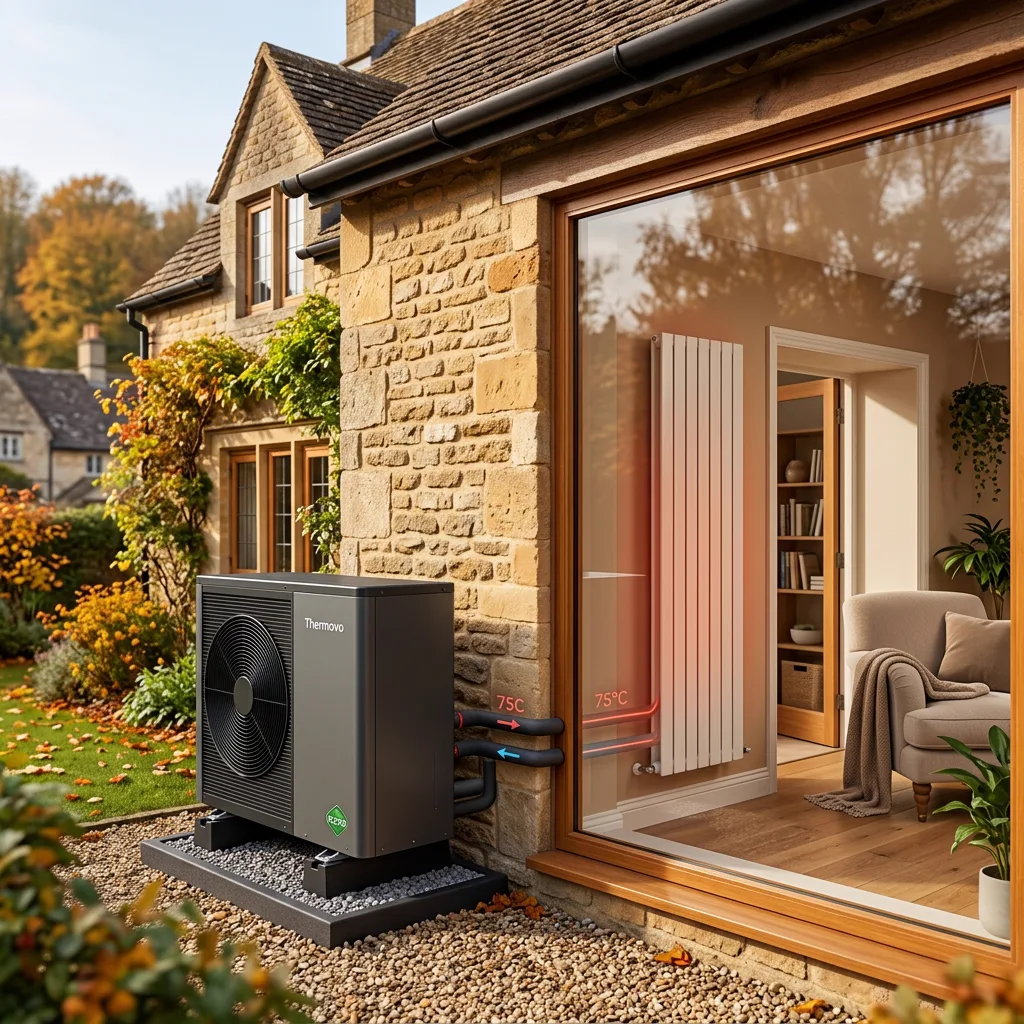
Cover: AI-generated editorial illustration; not a photograph of an installed Thermovo product.
Before requesting a project quotation
| Check | Information to prepare |
|---|---|
| Project scope | State the country, project type, operating conditions and required delivery date. Identify which decisions still need an installer or designer. |
| Topic-specific evidence | cooling loads, emitter suitability and condensation control |
| Responsibility and acceptance | Record who supplies, installs, commissions and services the equipment. Ask which documents and checks are included, and confirm exclusions in writing. |
This checklist helps define a request; it is not a model performance claim, installation design or promise of availability.
Relevant equipment · Request a project quotation — Emitters, hot water and cooling · About Thermovo
Continue your project planning
Heat Pump Domestic Hot Water: Cylinder Sizing, Legionella Cycles and Energy Savings · How to Choose a Heat Pump: Six Questions Before You Buy