Thermovo
Back to Blog
Technology

Integrating Heat Pumps with Solar Panels (PV) & Batteries: The Ultimate 2026 Home Energy Synergy

2026-07-02Thermovo Technical Team15 min read
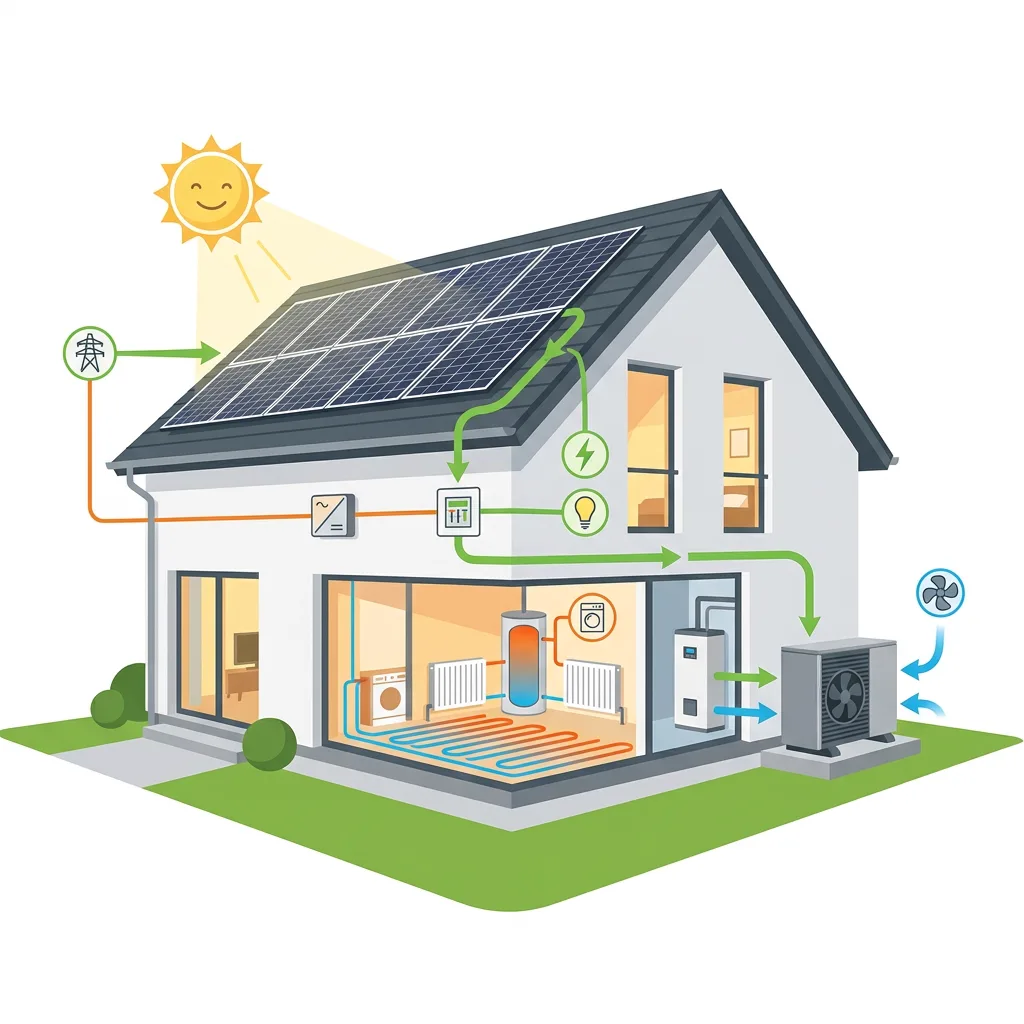
Infographic showing heat pump and solar panel integration

Integrating Heat Pumps with Solar Panels (PV) & Batteries: The Ultimate 2026 Home Energy Synergy

In the transition toward fully decarbonized buildings, individual technologies like air-to-water heat pumps, solar photovoltaics (PV), and residential battery storage systems (BESS) are powerful on their own. However, when deployed in isolation, they often suffer from seasonal and diurnal mismatch. A heat pump requires the most electricity during cold, dark winter months when solar generation is at its lowest. Conversely, a solar array produces the majority of its energy in summer when heating demands are non-existent.

In 2026, the integration of these three components into a single unified home energy ecosystem represents the gold standard of residential efficiency. By pairing a modulating heat pump with a solar PV system, a local battery, and a Smart Home Energy Management System (HEMS), homeowners can achieve up to 80% energy self-sufficiency while actively shielding themselves from volatile dynamic grid pricing.


1. The Energy Triad: Physics & Chemistry Working Together

To understand the synergy, we must look at how electrical energy (PV and batteries) converts and stores as thermal energy (heat pumps and water tanks).

graph TD
    PV[Solar PV Panels] -->|DC Power| Inv[Hybrid Inverter]
    Inv -->|DC Power| Batt[Battery Storage]
    Inv -->|AC Power| HEMS[HEMS / Smart Controller]
    HEMS -->|SG Ready / Modbus| HP[Modulating Heat Pump]
    HP -->|Thermal Energy| DHW[Domestic Hot Water Tank]
    HP -->|Thermal Energy| Buff[Buffer Tank / Underfloor Heating]
    Grid[Electrical Grid] <-->|Dynamic Tariffs| Inv

Solar PV (The Generator)

Provides clean, low-cost electricity. In 2026, typical residential PV installations range from 8 kWp to 12 kWp, yielding substantial excess electricity during spring, summer, and autumn days.

Battery Storage (The Buffer)

Acts as a high-speed buffer. Batteries handle short-term transients (e.g., passing clouds or appliance startups) and store daytime solar power for evening domestic electricity and heat pump operation. They operate on electro-chemical principles, with typical capacities ranging from 5 kWh to 15 kWh.

The Heat Pump (The Thermal Battery)

A heat pump is fundamentally a multiplier of energy. With a Coefficient of Performance (COP) of 4.0, 1 kWh of electricity yields 4 kWh of heat. More importantly, we can store this heat in thermal storage vessels (Domestic Hot Water (DHW) tanks and space heating buffer tanks). This concept, known as Power-to-Heat (P2H), allows us to use hot water as a cheap, highly durable "thermal battery," reducing the capacity requirement (and cost) of the electrochemical battery.


2. Integration Interfaces: SG Ready vs. Modbus TCP & EEBUS

Connecting these devices requires a communication standard. In 2026, installers rely on three main integration pathways:

Option A: SG Ready (Smart Grid Ready)

The SG Ready standard uses two binary (dry contact) inputs on the heat pump controller to switch between four operational states:

  1. State 1: Locked (Blockzeit) - The heat pump is forced off (usually during peak grid demand periods).
  2. State 2: Normal Operation - The heat pump runs standard heating schedules based on ambient temperatures.
  3. State 3: Recommendation (Einschaltempfehlung) - Triggered when there is excess solar PV power. The heat pump targets higher temperatures in the DHW tank and buffer tanks to store thermal energy.
  4. State 4: Command (Einschaltbefehl) - A hard trigger forcing the compressor and auxiliary heaters on to maximize self-consumption during extreme solar surpluses.

Option B: Modbus TCP & EEBUS (Dynamic Modulation)

While SG Ready is binary, Modbus TCP and EEBUS allow for continuous, analog-style communication. Instead of turning the heat pump completely on or off, the HEMS tells the inverter and heat pump exactly how much excess solar power is available (e.g., "750 Watts of surplus"). The heat pump then modulates its compressor frequency to consume exactly 750 Watts, matching PV generation perfectly and preventing any grid feed-in or battery drain.


3. Designing and Sizing the System (A 2026 Case Study)

To ensure the synergy works efficiently, components must be balanced. Let us examine a typical modern European home:

  • Location: Central Europe (Germany/Belgium/Netherlands)
  • Heat Load: 6 kW at -10°C ambient temperature
  • Annual Heating Demand: 12,000 kWh (Thermal)
  • Annual Electricity Demand (excl. heating): 4,000 kWh

Recommended Sizing Configuration:

ComponentTarget SizeRationale
Solar PV Array10 kWpEnsures sufficient generation on shoulder months (March/October) to run the heat pump directly.
Battery Storage10 kWh (LFP)Matches the daily baseload and provides enough buffer to run the heat pump for 3-4 hours at night.
Heat Pump6 kW (e.g., Thermovo R290 Monobloc)Modulates down to 1.5 kW to perfectly match lower daytime solar outputs.
DHW Tank300 LitersServes as a 15 kWh thermal storage buffer when heated from 10°C to 55°C.
Buffer Tank200 LitersProvides thermal mass to prevent heat pump short-cycling and allow for smart heat charging.

4. Operational Strategies for Maximum Efficiency

To unlock the full potential of this combined system, a smart controller runs three main strategies depending on the season:

Spring & Autumn (The Transition Months)

This is where the synergy shines brightest. During the day, the HEMS directs solar power first to cover home appliances, second to charge the battery, and third to run the heat pump to "superheat" the DHW tank to 55°C and the floor heating buffer to 35°C. At night, the heat pump draws from the battery and the stored thermal energy, resulting in zero grid electricity consumption for heating.

Winter (Solar Shortage & Tariff Arbitrage)

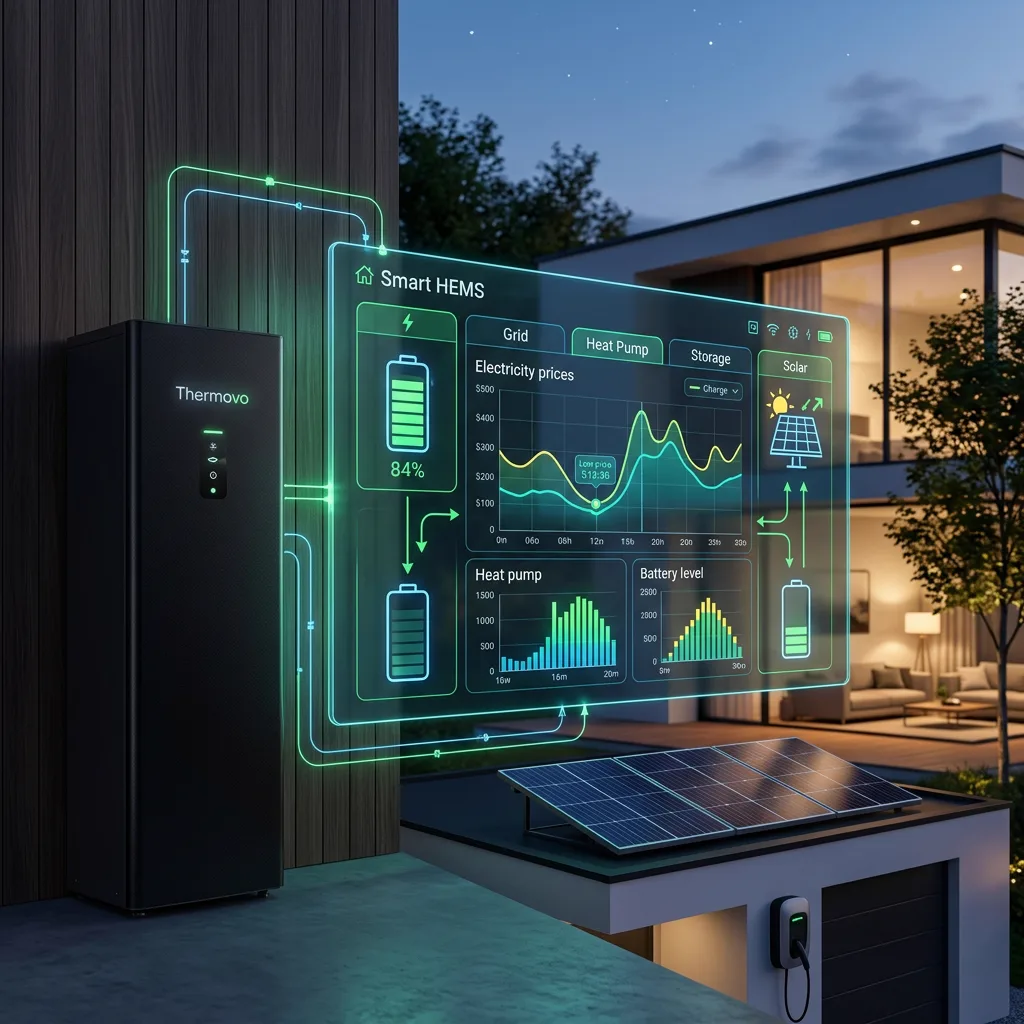
When solar yield is low, the system switches to Dynamic Tariff Arbitrage. Using dynamic tariffs (e.g., Tibber, Awattar), the HEMS monitors the next day's hourly electricity prices. It schedules the heat pump to run and the battery to charge during the cheapest hours (usually 2:00 AM to 5:00 AM, and 1:00 PM to 3:00 PM), storing heat and electricity for the expensive morning and evening peaks.

Summer (Cooling & Hot Water)

The heat pump switches to active cooling mode. The excess solar energy, which is abundant, is used to run the compressor to cool the home for free, while simultaneously heating the domestic hot water tank via heat recovery.


5. Financial Returns and Payback Period

Combining these technologies requires a higher upfront investment, but the reduction in running costs accelerates the payback period.

System ConfigurationEst. Upfront Cost (Net of Subsidies)Annual Operating CostEst. Payback Period
Gas Boiler + Standard Grid€8,000€2,800N/A
Heat Pump Only (Grid Powered)€11,000€1,4007-9 Years
Heat Pump + PV + Battery + HEMS€21,000€3506-8 Years

Note: Estimates are based on 2026 European average energy prices (Electricity: €0.30/kWh, Gas: €0.12/kWh) and assume typical regional subsidies for clean energy integration.


Conclusion: Ready for the Future of Energy

Integrating a heat pump with solar PV and battery storage is no longer a concept for early adopters; in 2026, it is the most economically sound and environmentally responsible way to power and heat a home. By storing solar energy as both electrical energy in a battery and thermal energy in water, homeowners can achieve unparalleled levels of self-consumption and energy security.

Are you looking to design or upgrade your home energy system? Contact the Thermovo Technical Team today for an engineered, customized system layout designed for maximum efficiency. Get in touch with us.