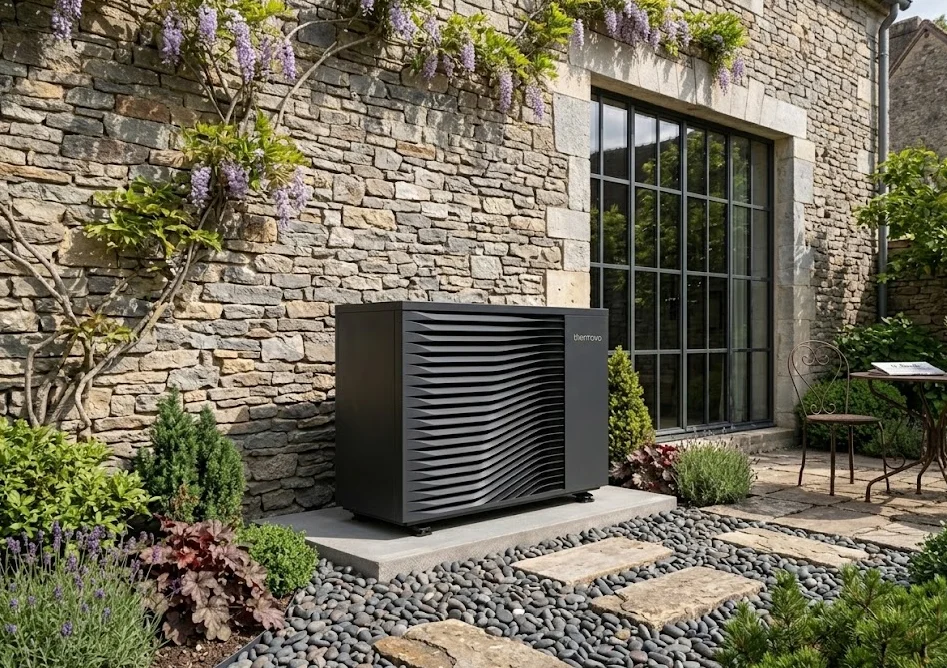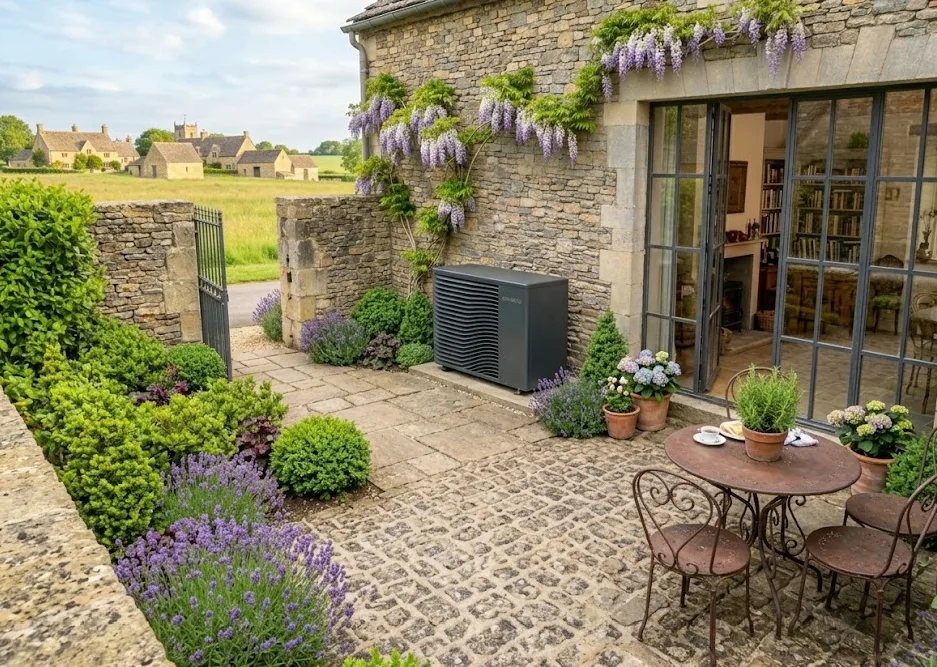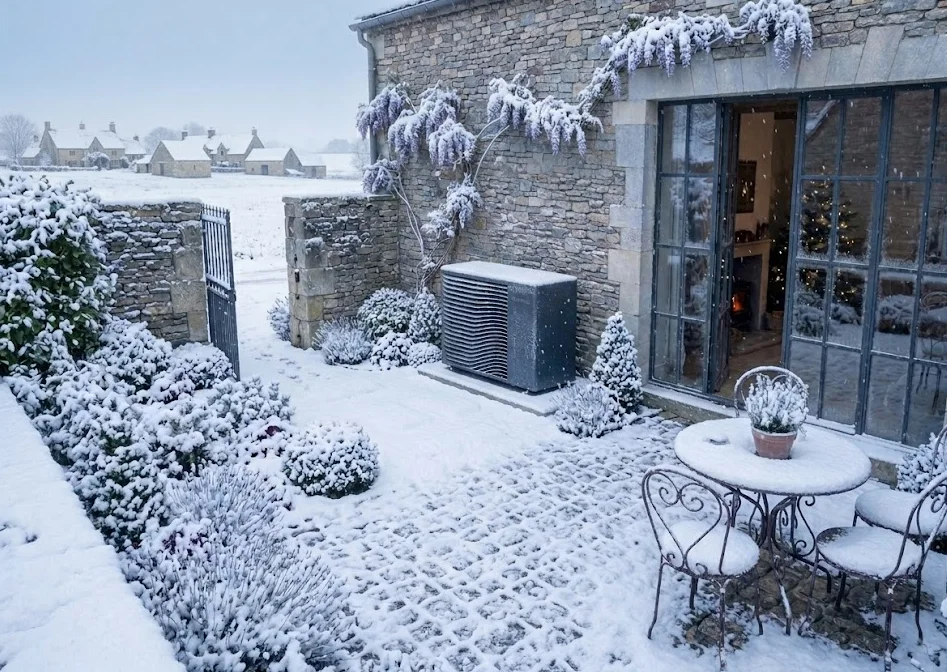
Cold weather does not make an air source heat pump unsuitable. What matters is whether the system is selected, installed, and commissioned for the building's real winter load. In Northern Europe, alpine regions, and exposed coastal areas, a well-designed heat pump can still deliver stable comfort at outdoor temperatures below 0°C.
The key is to stop comparing heat pumps only by nominal output at +7°C. For a cold climate project, the important figures are heating capacity at -7°C, -10°C, and -15°C, seasonal efficiency at the required flow temperature, and how the unit manages defrost cycles.
1. Check Capacity at Design Temperature
Every building has a design temperature. A house in the Netherlands may be sized around -10°C, while a site in southern Germany or Austria may need -12°C to -16°C calculations. The heat pump should cover the main heating load at that temperature without relying too heavily on electric backup.
Ask for these values before choosing a unit:
| Item to Verify | Why It Matters |
|---|---|
| Output at -7°C and -15°C | Shows real winter capacity, not brochure capacity |
| COP at 35°C and 55°C flow | Reveals cost difference between underfloor heating and radiators |
| Minimum modulation | Prevents short cycling during mild weather |
| Defrost logic | Protects comfort during humid freezing conditions |
2. Flow Temperature Drives Winter Cost
Cold climate efficiency is not only about outdoor air. It is also about how hot the water needs to be. Underfloor heating at 30°C to 35°C lets the compressor work gently. Old radiators may need 50°C to 60°C on the coldest days.
This is where R290 heat pumps have a useful advantage. Because propane can support high flow temperatures efficiently, R290 monobloc systems are often a strong match for renovation projects where replacing every radiator is not practical.
3. Defrost Is Normal, but It Must Be Managed
When humid air freezes on the outdoor coil, the heat pump briefly reverses operation to melt the frost. Good systems make this almost invisible to the homeowner by using smart coil sensors, variable-speed fans, and stable water volume in the heating circuit.
A buffer tank or hydraulic separator can help in systems with low water volume. It gives the heat pump enough stored energy to defrost without pulling too much heat from the rooms.
4. Installer Checklist for Cold Regions
- Confirm the heat loss calculation room by room.
- Select the heat pump using capacity at the local design temperature.
- Keep pipe runs insulated and protected from wind.
- Make sure condensate drainage cannot freeze.
- Commission the weather compensation curve instead of using a fixed high flow temperature.
- Verify that backup heating is a safety layer, not the primary winter strategy.
Thermovo Recommendation
For cold climate homes, Thermovo usually recommends an R290 monobloc heat pump paired with weather compensation, correct hydraulic volume, and low-temperature emitters where possible. The result is not simply "more power"; it is steadier operation, fewer starts, and a lower seasonal electricity bill.
Before requesting a project quotation
| Check | Information to prepare |
|---|---|
| Project scope | State the country, project type, operating conditions and required delivery date. Identify which decisions still need an installer or designer. |
| Topic-specific evidence | capacity and electrical input at the local design temperature |
| Responsibility and acceptance | Record who supplies, installs, commissions and services the equipment. Ask which documents and checks are included, and confirm exclusions in writing. |
This checklist helps define a request; it is not a model performance claim, installation design or promise of availability.
Relevant equipment · Request a project quotation — Efficiency and sizing · About Thermovo